Taylor Werner · 1 November 2026
Mistvale's Bird Monitoring Network Links Classroom Projects to Downtown Business Growth
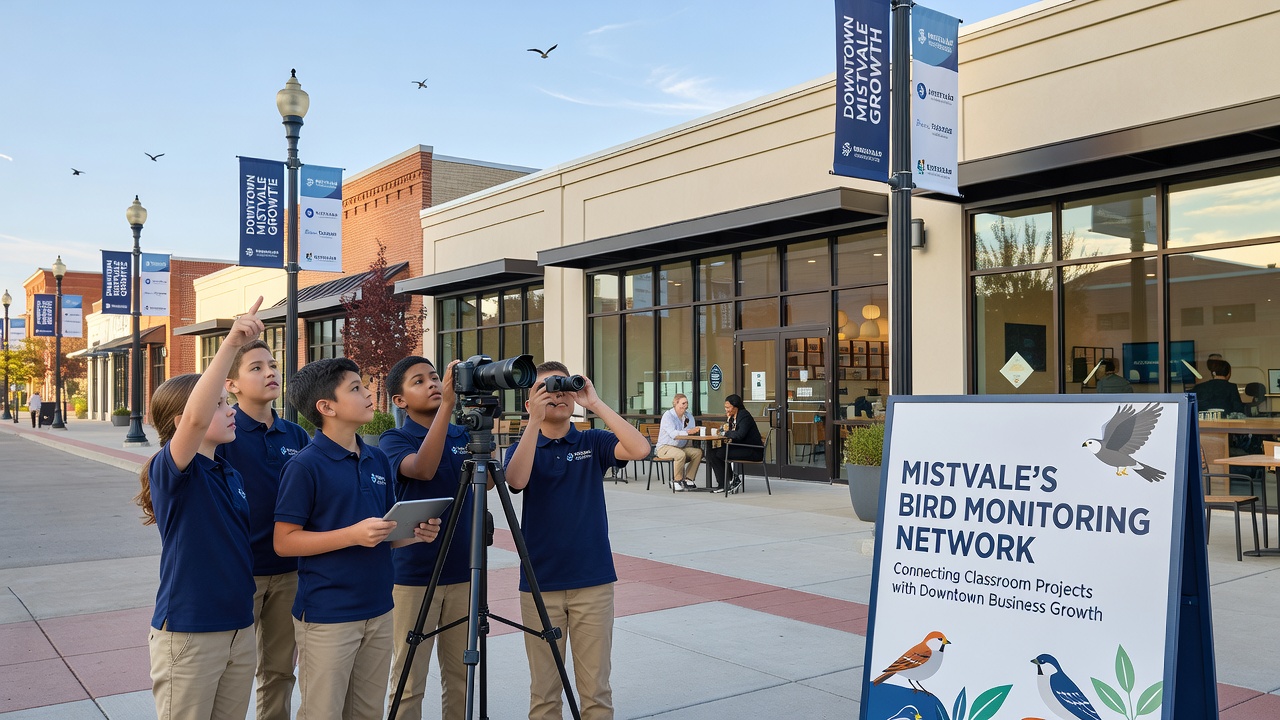
Students across Mistvale have integrated bird monitoring activities into science curricula since the network launched several years ago, and data collected by these classroom projects now feeds directly into reports that downtown businesses use for seasonal planning. Local schools coordinate with the Mistvale Environmental Education Center where participants record species sightings, migration patterns, and habitat changes on standardized apps, while the resulting datasets reach chambers of commerce that track how nature-based tourism influences foot traffic in commercial districts.
Network Structure and Data Collection Methods
Stations placed at five school sites plus three downtown green spaces operate year-round, and volunteers upload observations through a shared platform that timestamps entries for accuracy; researchers at the regional university cross-reference these records with satellite imagery to map urban bird corridors. In November 2026 the network added acoustic sensors at two central locations, and preliminary readings have already captured nocturnal calls from species that daytime surveys often miss, which allows businesses such as cafes and retail outlets to time outdoor promotions around peak bird activity periods that draw visitors.
Classroom Integration and Student Contributions
Teachers incorporate weekly field sessions where classes compare counts from previous seasons, and students learn to identify common species while contributing to long-term datasets that exceed what professional staff alone could gather. One middle school group documented a 12 percent rise in winter finch sightings between 2024 and 2025, and that information reached downtown merchants who subsequently adjusted window displays and menu offerings to highlight local wildlife themes. The program requires participants to follow protocols developed by established ornithological groups, and results feed into annual summaries distributed to both educators and economic development offices.
Business Growth Patterns Tied to Monitoring Data
Downtown establishments have reported measurable increases in customer visits during weeks when monitoring alerts highlight unusual bird concentrations, and several shops now stock related merchandise such as field guides and binoculars after reviewing network summaries. Data indicates that guided bird walks organized through the chamber of commerce attract an average of 35 participants per event, and these outings often conclude at nearby businesses where attendees extend their stay. According to statistics from the North American Bird Conservation Initiative, citizen-science programs like Mistvale's generate observations that support habitat planning, and local entrepreneurs have applied similar principles when designing storefront plantings that encourage bird presence.

Analysts from the European Environment Agency have noted in separate studies that urban biodiversity initiatives can correlate with retail foot traffic when communities publicize wildlife data, and Mistvale's network follows comparable approaches by sharing monthly updates through business association newsletters. Retail owners review these reports to schedule events such as early-morning coffee gatherings aligned with dawn chorus peaks, and the strategy has coincided with higher weekday sales in participating districts. Partnerships between schools and merchants also include internship opportunities where students analyze business-relevant subsets of the monitoring data, which strengthens ties between educational outcomes and commercial strategies.
Expansion Plans and Regional Comparisons
Planners intend to add two additional monitoring points along the river corridor by spring 2027, and funding applications reference successful models from Australian urban biodiversity projects that linked school data collection to tourism revenue. Current figures reveal that 180 students contributed observations in the most recent academic year, and the cumulative dataset now exceeds 45,000 entries that both researchers and business analysts access through an open portal. Government agencies in Canada have published guidelines on integrating environmental monitoring with local economies, and Mistvale's approach mirrors those recommendations by routing classroom findings into chamber of commerce planning sessions.
Conclusion
The bird monitoring network continues to supply consistent data streams that support classroom learning objectives while informing downtown commercial decisions, and ongoing expansions aim to maintain these connections as the program scales. Records from November 2026 already show how new sensor inputs refine seasonal forecasts that businesses incorporate into their calendars, demonstrating the practical overlap between educational projects and economic activity in Mistvale.