Taylor Werner · 20 September 2026
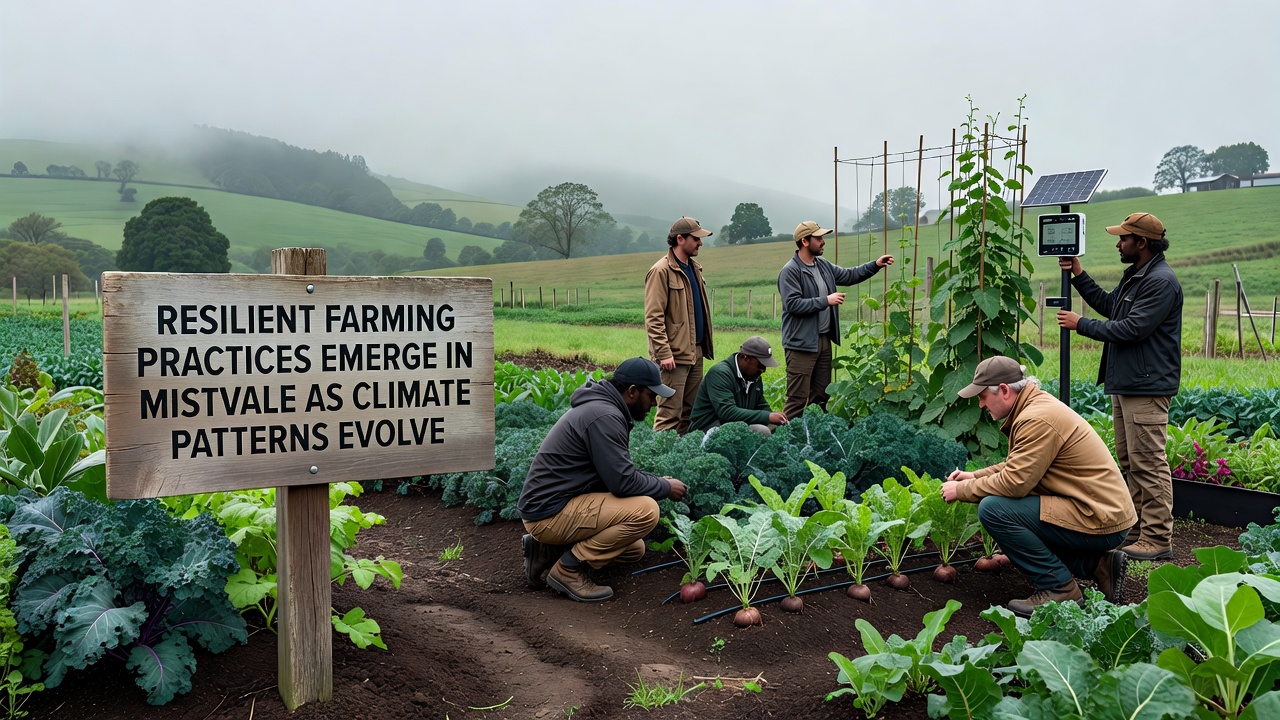
Resilient Farming Practices Emerge in Mistvale as Climate Patterns Evolve
Farmers across Mistvale have adjusted their operations in response to shifting rainfall patterns and temperature fluctuations that have marked recent growing seasons, with local records showing irregular precipitation since 2023 that continued into 2026. These changes prompted a range of adjustments including crop rotation schedules modified to account for drier summers, while soil management techniques such as cover cropping gained wider adoption to retain moisture and reduce erosion during intense storms.
Observed Shifts in Local Weather Data
Weather monitoring stations maintained by the Mistvale Agricultural Cooperative recorded a 15 percent decline in average spring rainfall between 2020 and 2025, and data compiled through September 2026 indicated continued variability with several months deviating from historical norms by more than 30 percent. Researchers at the regional extension office noted that these patterns align with broader trends documented in North American climate assessments, prompting growers to test varieties previously considered marginal for the area.
One farm near the eastern ridge switched from standard corn hybrids to drought-tolerant lines developed by university breeding programs, and yields held steady despite reduced irrigation availability during peak summer months. Similar trials on neighboring properties incorporated intercropping methods that pair legumes with grains, a combination that improves nitrogen fixation and supports soil structure under fluctuating moisture levels.
Adoption of Specific Techniques
Precision irrigation systems connected to soil moisture sensors have appeared on several mid-sized operations, allowing water application to match real-time field conditions rather than fixed schedules. Equipment dealers in Mistvale reported increased sales of these units through the first half of 2026, with installation numbers rising after demonstrations held at the county fairgrounds. Farmers who installed the systems cited reduced pumping costs and fewer instances of overwatering during unexpected wet spells.
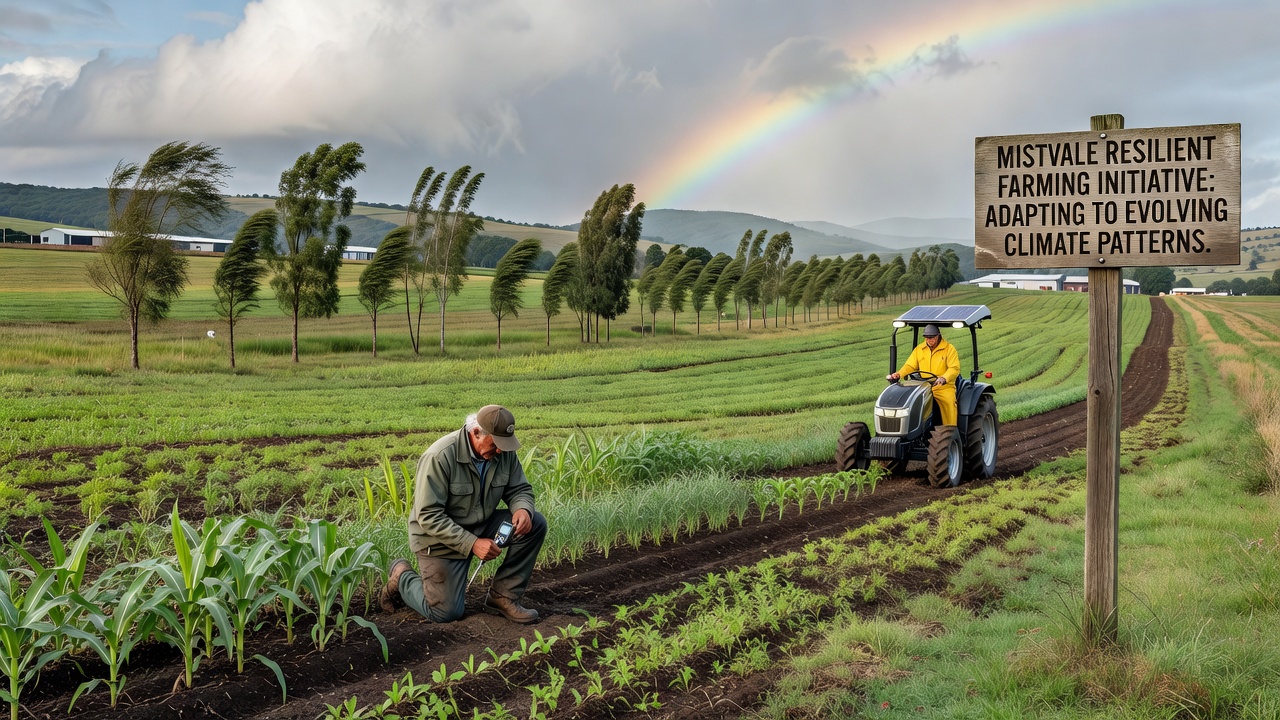
Cover crop mixes containing rye, clover, and radish have become common on fields left fallow between main crops, and a 2025 survey conducted by the cooperative found that 42 percent of respondents planted such mixes on at least 20 percent of their acreage. The practice helps maintain ground cover that limits wind erosion and builds organic matter, benefits confirmed in field trials run by the state university's agronomy department.
Support Programs and Knowledge Sharing
Workshops organized through the Mistvale Extension Service drew steady attendance in 2026, with sessions covering soil health testing and variety selection drawing participants from surrounding townships. Funding from a federal conservation initiative covered part of the costs for soil sampling kits distributed at these events, and follow-up visits documented increased use of test results to guide fertilizer decisions. Local producers also exchanged information through an online forum hosted by the cooperative, where growers posted observations about which cover crop combinations performed best under the season's conditions.
Equipment sharing arrangements have expanded as well, with several operators pooling resources to purchase no-till drills that minimize soil disturbance. These arrangements reduce individual capital outlays while spreading the use of tools that preserve soil aggregates during periods of heavy rain. Records kept by the cooperative show that shared equipment use increased by 28 percent between 2024 and 2026.
Regional Comparisons and Ongoing Monitoring
Comparisons with neighboring counties reveal that Mistvale growers adopted certain practices at similar rates to operations in areas with comparable soil types, although uptake of sensor-based irrigation lagged slightly behind regions that received earlier grant support. Ongoing data collection through the cooperative's network continues to track metrics such as soil organic carbon levels and water infiltration rates, providing baseline figures for evaluating long-term outcomes. A report scheduled for release in late September 2026 will compile the first multi-year dataset from these monitoring efforts.
Industry groups including the National Farmers Union have highlighted similar adaptation strategies in other parts of the country, while Australian government agricultural reports describe parallel shifts toward water-efficient cropping systems in variable climates. These external references serve as reference points for local planning meetings where producers review options suited to Mistvale conditions.
Conclusion
Continued monitoring and incremental adjustments characterize the current phase of practice changes in Mistvale, with emphasis placed on measurable outcomes from soil tests and yield records rather than broad claims. The cooperative plans to expand its data collection network in the coming seasons, incorporating additional sensors at sites that represent different soil and elevation profiles across the area. This approach keeps decisions grounded in accumulating local evidence while allowing growers to respond to each season's specific conditions.